Infection control may no longer dominate the news cycle, but the risks it protects against haven’t gone anywhere. Australian workplaces continue to operate under strict hygiene expectations, and regulators still monitor compliance closely. The Australian Commission on Safety and Quality in Health Care reports that national hand‑hygiene compliance remains at 86.3%, above the 80% benchmark but still leaving room for improvement across industries. These figures highlight that infection control is not a “Covid‑era concern”, it’s an ongoing operational responsibility.
For businesses, the consequences of poor hygiene practices remain significant. Staff illness, customer exposure, reputational damage, and even temporary closures can still occur when infection control standards slip. While public attention has shifted, the regulatory and financial risks have not. Maintaining strong infection‑control practices is just as important today as it was during the height of the pandemic.
The Hidden Risks of Letting Standards Slide
As infection control fades from everyday conversation, many workplaces unintentionally relax their hygiene routines. High‑touch areas, shared equipment, and busy communal spaces can quickly become hotspots for bacteria and viruses. The Australian Institute of Health and Welfare continues to track hospital‑acquired complications, including infections caused by pathogens such as Staphylococcus aureus, underscoring that harmful microorganisms remain a real and ongoing threat.
When businesses let standards slip, the consequences can escalate quickly. A minor hygiene breach can lead to staff absences, customer complaints, or even operational shutdowns, all of which cost far more than maintaining a proactive infection‑control program. Businesses that continue to prioritise hygiene protect not only their people but also their productivity, continuity, and financial stability.
Urban Clean’s Commitment Hasn’t Changed
While infection control may no longer be front‑of‑mind for many organisations, Urban Clean has never stepped back from delivering industry‑leading hygiene services. We continue to use ATP Hygiene Monitoring to detect viruses, bacteria, and pathogens on surfaces, providing businesses with measurable, science‑backed insights into their hygiene levels. This data‑driven approach ensures that cleaning isn’t just “done”, it’s verified.
Our teams also conduct comprehensive workplace assessments, identifying sanitisation breaches and cleaning inefficiencies before they become costly problems. This proactive approach ensures our clients remain compliant with evolving regulations and maintain a safe environment for staff and customers. Infection control isn’t a trend for us, it’s a core part of how we protect businesses across Australia.
Why Businesses Still Need Professional Infection Control
Professional infection‑control cleaning goes far beyond standard cleaning routines. It includes deep cleaning, hospital‑grade disinfection, antimicrobial surface treatments, and ongoing testing to ensure protocols remain effective. These measures reduce the risk of workplace outbreaks, protect vulnerable individuals, and help businesses meet their legal obligations under Australian workplace health and safety standards.
Customer expectations around cleanliness also remain high. Even though the urgency of the pandemic has passed, people still expect businesses to maintain visibly clean, hygienic environments. Organisations that continue to invest in infection control build trust, demonstrate responsibility, and create safer, more resilient workplaces.
Our Five‑Step Infection Control Process
1. Deep Clean & Hygiene Assessment
Every infection control service begins with a detailed Hygiene Assessment of your workplace. Dust, dirt, and organic matter can trap pathogens or reduce the effectiveness of disinfectants, so most sites require a thorough deep clean before any specialised treatment can begin. This step ensures all surfaces are properly prepared for high‑grade disinfection.
2. Hospital‑Grade Disinfection
Once surfaces are cleaned, we disinfect all high‑touch areas using hospital‑grade products designed to eliminate a wide range of viruses and bacteria. After treatment, surfaces are carefully rinsed to protect materials and ensure long‑term durability.
3. Long‑Lasting Antimicrobial Protection
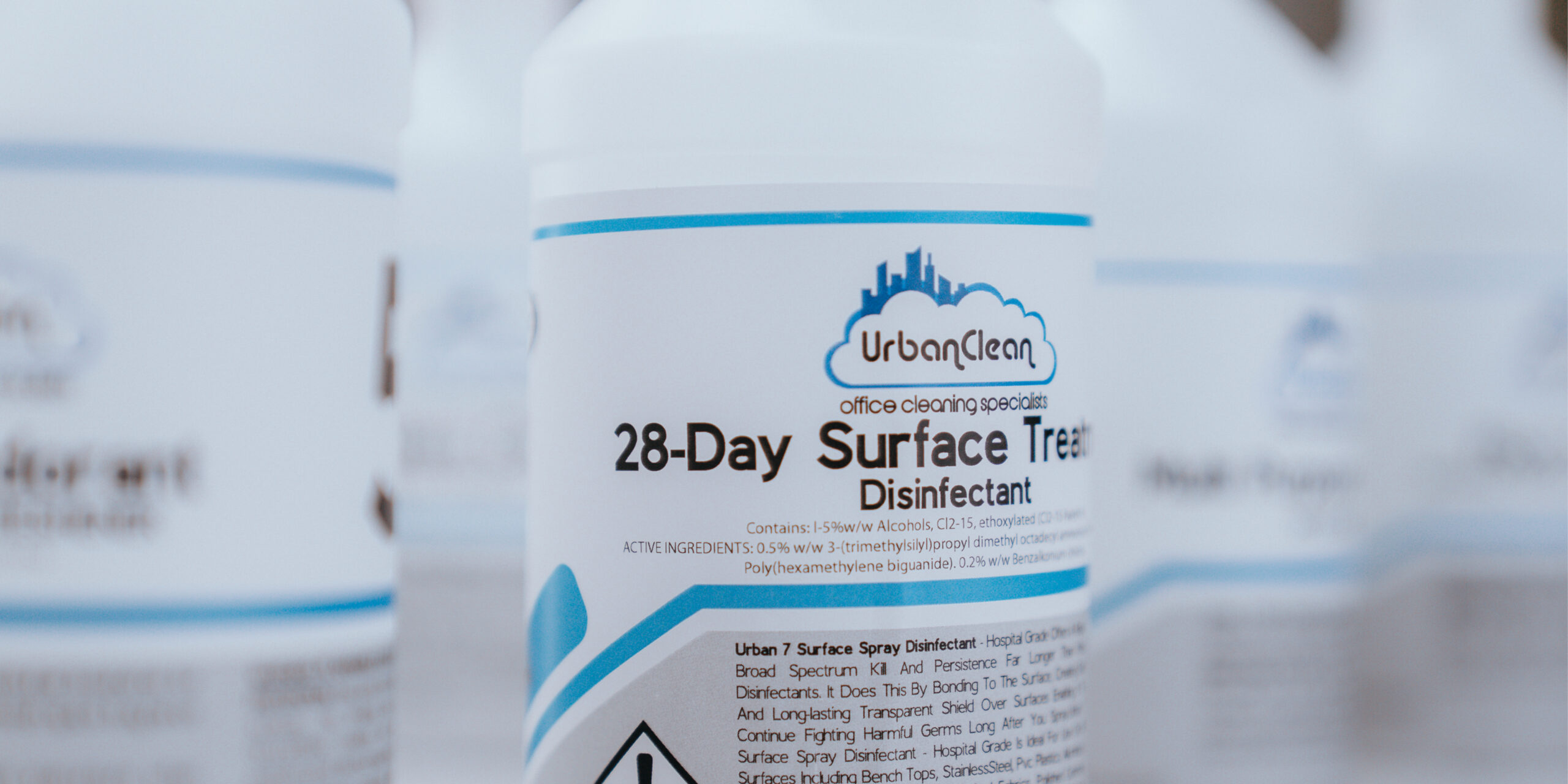
We apply a 28‑day antimicrobial surface treatment to create an ongoing protective barrier. In some environments, we also use targeted disinfection fogging for additional coverage. Our eco‑friendly, non‑toxic reactive silane technology prevents microbial growth and biofilm formation by disrupting pathogens at the cell‑wall level. For context: viruses such as Covid‑19 can survive on hard surfaces for several days without proper treatment.
4. Independent ATP Testing & Reporting
To verify the effectiveness of our work, surfaces are ATP tested to industry standards. We compile the results, along with a full list of treated areas and the procedures used, into a clear, easy‑to‑understand report. This gives businesses measurable proof of hygiene performance and compliance.
5. Ongoing Hygiene Maintenance
A regular cleaning schedule is essential for maintaining infection control standards. Layers of dirt can hide antimicrobial coatings and reduce their effectiveness, so touchpoints are disinfected after every clean and antimicrobial treatments are reapplied monthly. Each service includes a real‑time digital report confirming exactly what was completed.
Take the Next Step Toward a Safer, More Compliant Workplace
If your business is ready to strengthen its hygiene standards and protect staff and customers year‑round, Urban Clean is here to help. Get in touch today to book an infection‑control assessment and see how our proven five‑step process can safeguard your workplace. Click here to find out more.
Sources
- Australian Commission on Safety and Quality in Health Care, National Hand Hygiene Audit (86.3% compliance)
- Australian Institute of Health and Welfare, Safety & Quality in Australian Hospitals (hospital‑acquired complications and infection data)
- Safe Work Australia, Workplace hygiene and WHS compliance guidelines